Align region names to one standard
Combine sido, sigungu, and dong into a composite key that connects tables safely.
Question for this chapter
How can a dong be connected without confusing it with a same-named dong elsewhere?
Why this matters now
A name such as 중앙동 can occur in several sigungu. Joining on the dong name alone can mix regions.
sido|sigungu|dong turns the complete regional address into the key.
Try it
Open Floating Population (floating_population) and Resident Population
(residents_population) in COVID-19 Data Collection. In Schema, verify that sido, sigungu,
and dong are all Text.
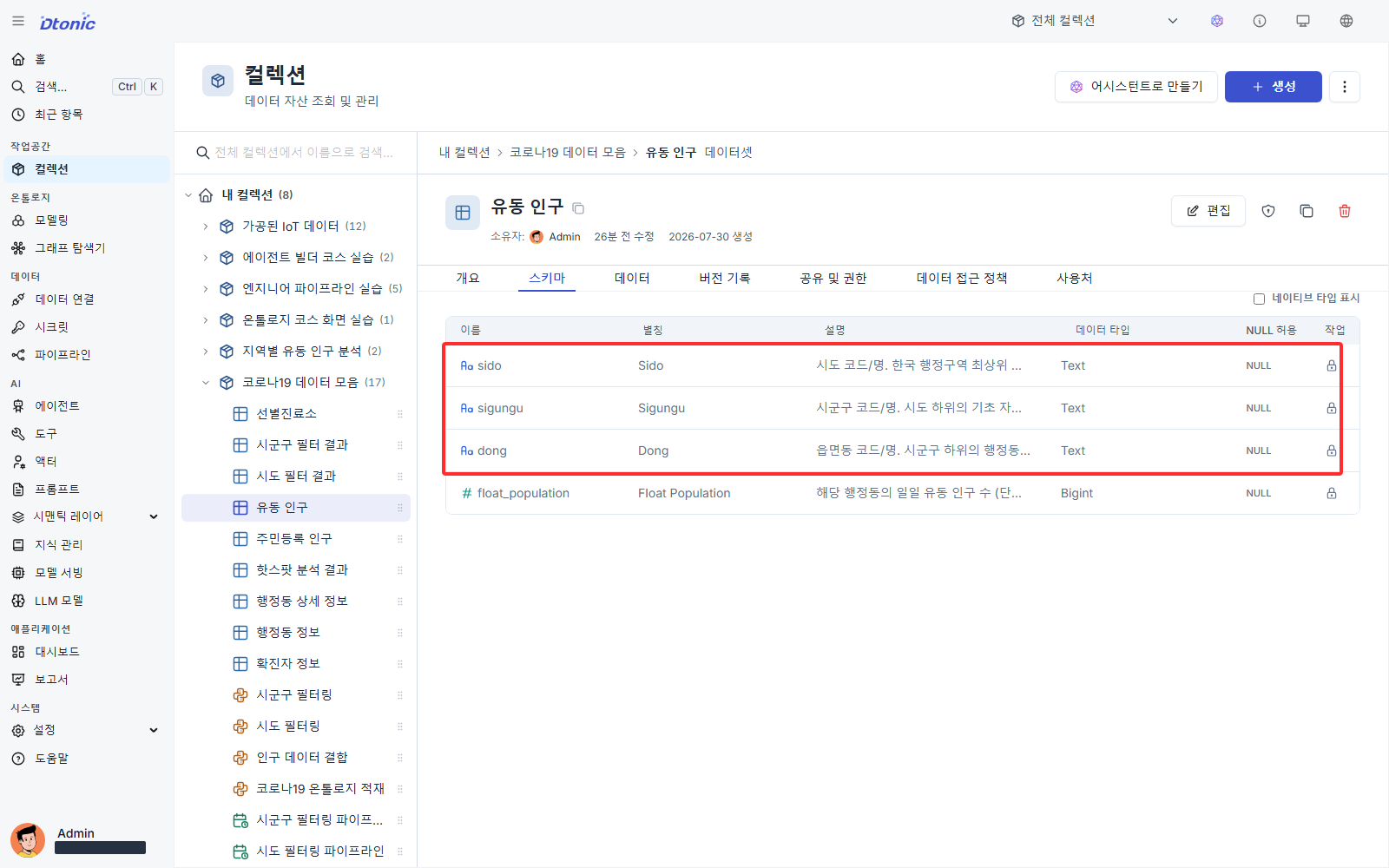
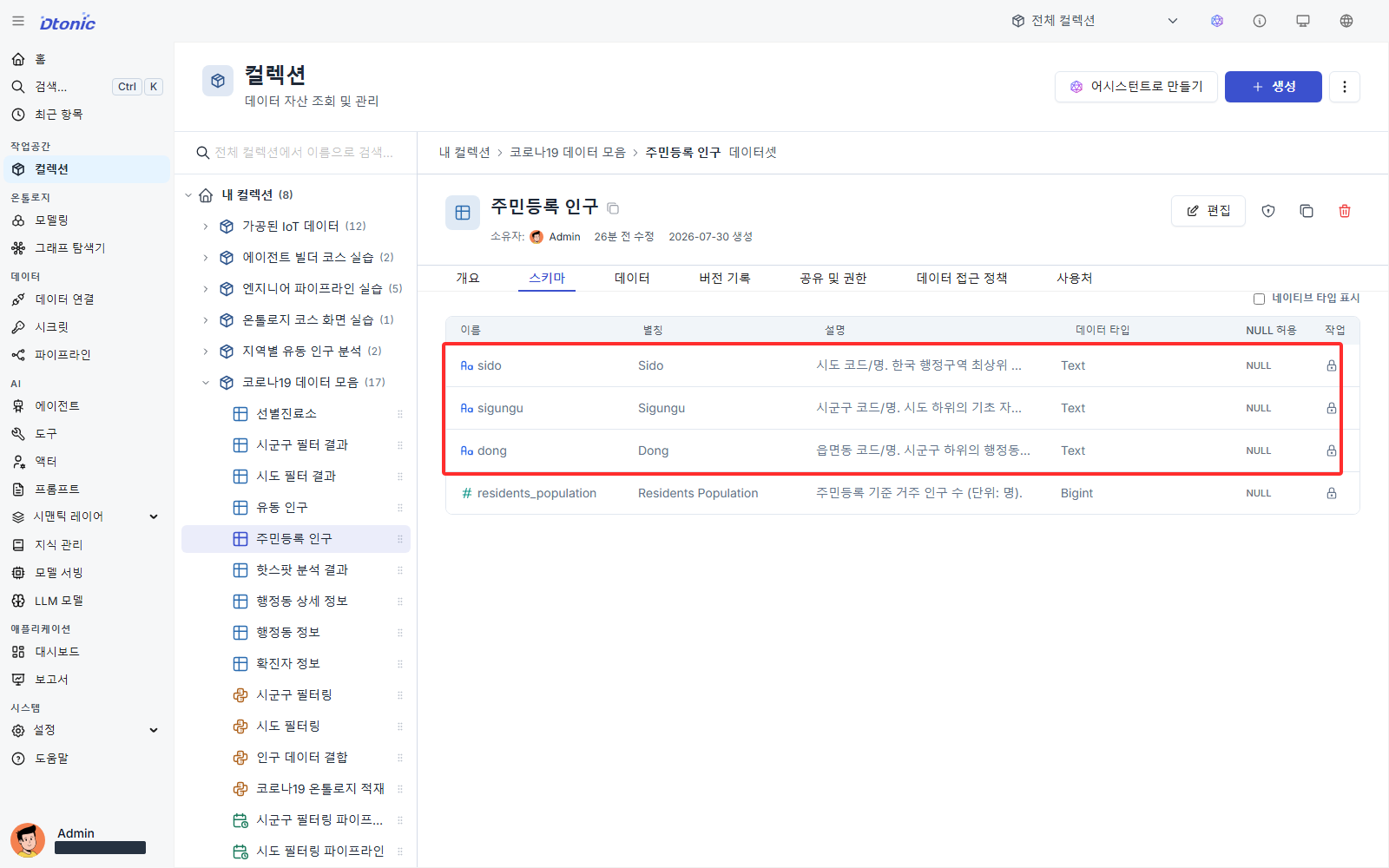
Open Population Data Join Pipeline. Verify that the two inputs feed the join code and that the code
feeds Dong Information (region_dong), then select Run now.
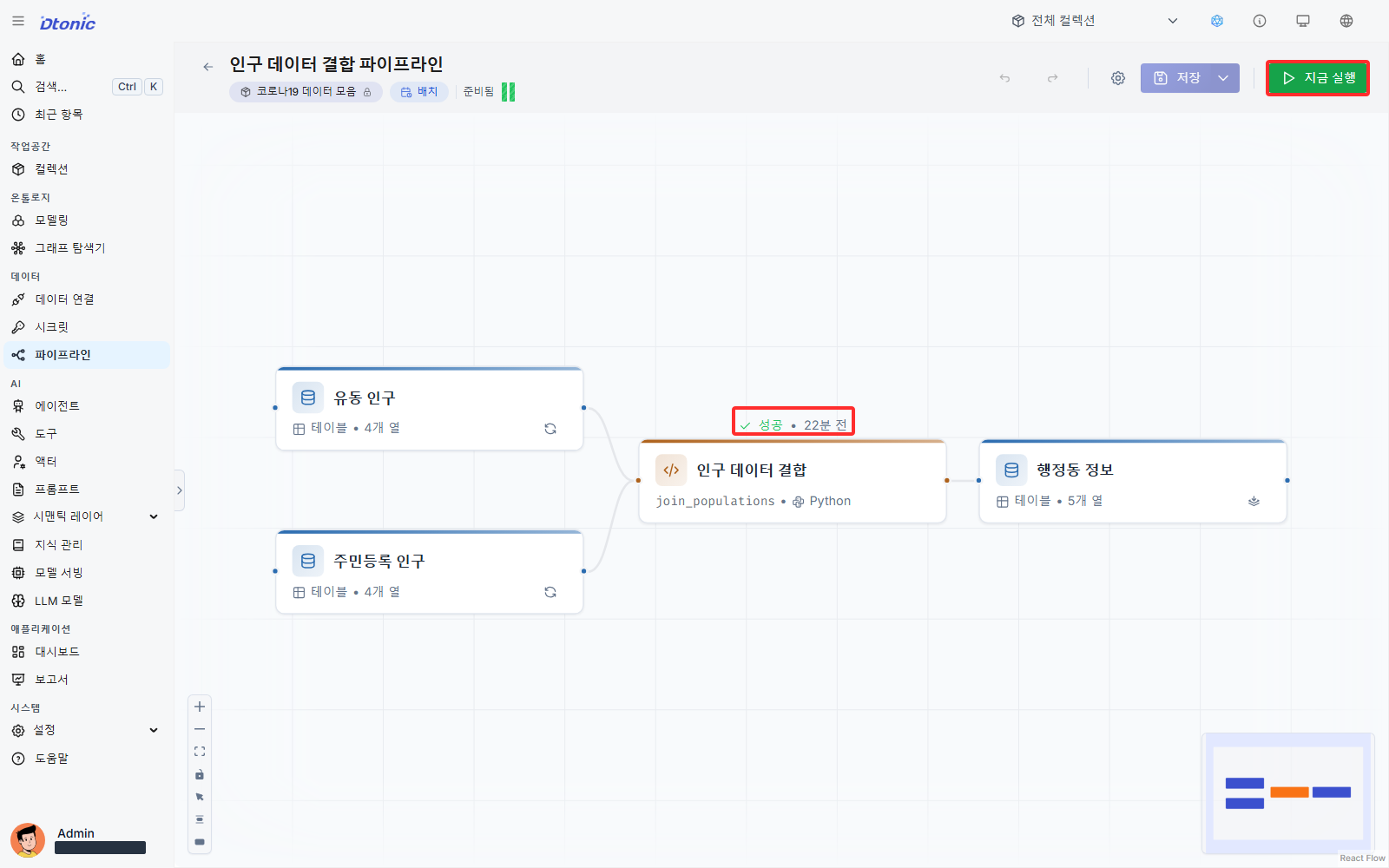
Success looks like this
The run ends successfully and Dong Information (region_dong) has a new version.
Interpret the result
서울특별시|노원구|중계4동 contains all three levels and cannot collide with a same-named dong elsewhere.
The full regional hierarchy—not one name—is the join key.
| Observation | Interpretation | Operational use |
|---|---|---|
Both inputs contain sido, sigungu, and dong. | The tables are ready for one hierarchy. | Apply the same join to population, patient, and facility data. |
| All three fields are Text. | Type differences are less likely to drop a match. | Verify the schema contract before running. |
Both population fields appear in one region_dong row. | The composite key connected the same area. | Use the row for regional differences and rates. |
Do not judge a join only by its row count. A region present only on the left can disappear. In operations, compare unique-region counts and list unmatched regions before and after the join.
Next decision
The regions now connect correctly. Next, distinguish the meaning of resident and floating population in the same row.